

Introduction
Automobile manufacturers throughout the world are under immense pressure to achieve cost savings and operational efficiencies with supply chain reliability. One problem that persists is the problem of procuring critical metal parts in the area of automobile CNC machining, whereby high costs and lack of quality control measures are major issues in this domain. The key issue here is that many companies are still restricted to working in traditional supply chain systems without proper evaluation and utilization of their potential global manufacturing capacity. There is an apparent lack of information about the advanced manufacturing capacities of China for CNC machining, which could be an opportunity for Digital Growth through optimized procurement techniques.
This paper discusses in detail how, through scientific supplier selection and process integration, CNC machining services in China can be utilized as a key factor in attaining a seamless shift from Prototype to Scale, while at the same time assuring the required level of quality in terms of Global Client Support. The answer to the following questions will provide a basis for decision-making.
Why is China Considered the Cost-Efficiency Center for Automotive Component CNC Machining?
It has also cemented itself as the center of gravity in terms of CNC machining in cars globally, thanks to an incredible convergence of factors that make it an overwhelming system that no other region can compete with.
The Force Multiplier of Industrial Clustering and Scale
The CNC machining in China industry has been woven into the world’s most extensive manufacturing network. Not only are materials such as CNC machining aluminum available, but tools and machinery are at arm’s length. All of this clustering significantly lowers logistical costs and minimizes procurement time.
Cost Advantage Supported by Data
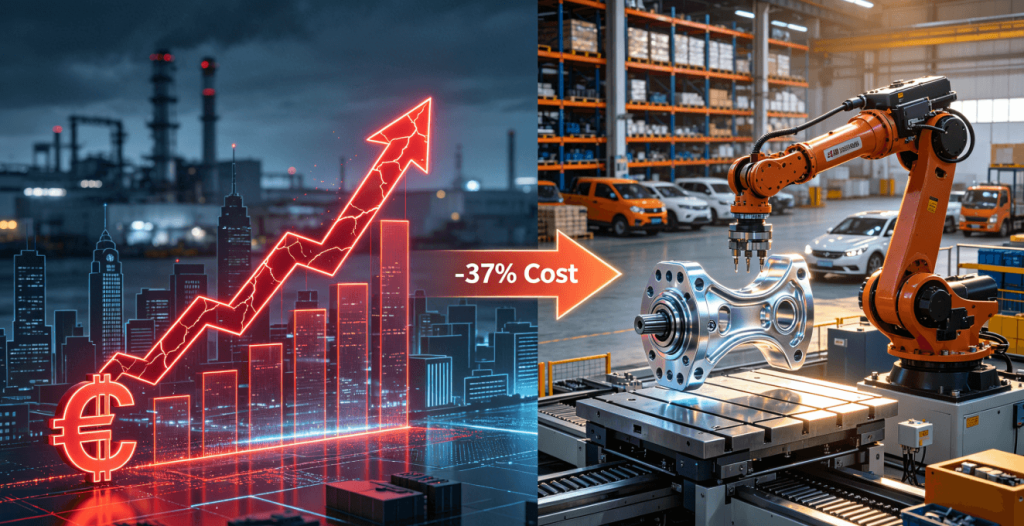
It all translates into an enormous cost of ownership advantage. With regard to Western suppliers, engaging Chinese experts in auto CNC machining will enable to reduce total cost of service by 30% to 50%. The savings arise from efficient utilization of cheap labor, advantages of economy of scale in terms of materials sourcing, and exceptionally high utilization rate of machines that comes with lean production approach. Readers interested in specific data can review this CNC Machining Services Comparison study.
- Moving Beyond Just Labor Rates
Cost advantages go way beyond just low labor rates. They stem from extensive knowledge base that enables to achieve great cost efficiencies. Chinese manufacturers have huge databases of materials and machining operations for highly intricate automotive parts that ensure maximum machining productivity.
- Technological Adoption
Use of multiple axis CNC machines and automation of manufacturing processes is another source of efficiency gains. Optimization of machining programs and parameters ensures quick processing of orders and reduction in scrap rate.
How to Evaluate the Quality System and Compliance of an Overseas CNC Machining Supplier?
The key factor when dealing with foreign suppliers, especially where CNC automotive parts are concerned, is the quality management system that the vendor follows. It requires going beyond the mere certification checklists and delving into the implementation of a strict procedure in practice.
To be a reliable vendor, one needs to have relevant CNC machining certification such as IATF 16949 for automobiles and AS9100D for aerospace engineering. Both of these certifications require following a process-driven approach and establishing a system that focuses on managing risks to ensure total control from the time an order is placed until the product is delivered to the customer. The certification, however, does not equal implementation – the latter is what ensures defect-free manufacturing. High-end vendors show their professionalism by following SPC standards and providing PPAP documentation for their products, among other measures.
What are the Key Transitions in the CNC Machining Process from Prototype to Mass Production?
Scaling from a single prototype up to large-scale manufacturing is a paradigm shift in mindset and process. Successfully transitioning through this phase from Prototype to Scale is the ultimate demonstration of the capability of the supplier to be an OEM’s true partner in CNC machining for OEMs.
The Paradigm Shift – From Flexibility to Consistency
Prototyping requires a fast pace, and even at a higher tolerance to costs. Large-scale manufacturing, on the other hand, requires rock solid consistency and cost-efficiency. An entire workflow of the automotive machine shop must be adjusted to deliver consistent results over thousands of iterations.
Working Together – DFM & Process Optimization
Consistent results require a partner with whom to work together throughout the process. Experienced suppliers perform the initial Design for Manufacturability (DFM) analysis, advising on subtle changes that would make your design more manufacturable, more assembly-friendly, or simply more efficient.
- Technological and Strategic Shifts
Efficient scaling requires an entire redesign of the process. This means going from three axes to four or five axes in order to make complicated parts using just one fixture, thus increasing precision and minimizing handling.
- Automation and Cost Awareness
Robotic loading and unloading and machining cell systems allow operations to occur around the clock, reducing costs per piece significantly. Also, having a professional partner ensures that he will share valuable information on how to lower the costs of manufacturing batches, from tooling selection all the way down to cooling. Something like the article A Guide to the Cost Breakdown of Batch Production for Automotive and Industrial CNC Machining Services is very helpful here.
Why Does Aluminum Dominate Automotive CNC Machining, and What Are Its Real Advantages and Limits?
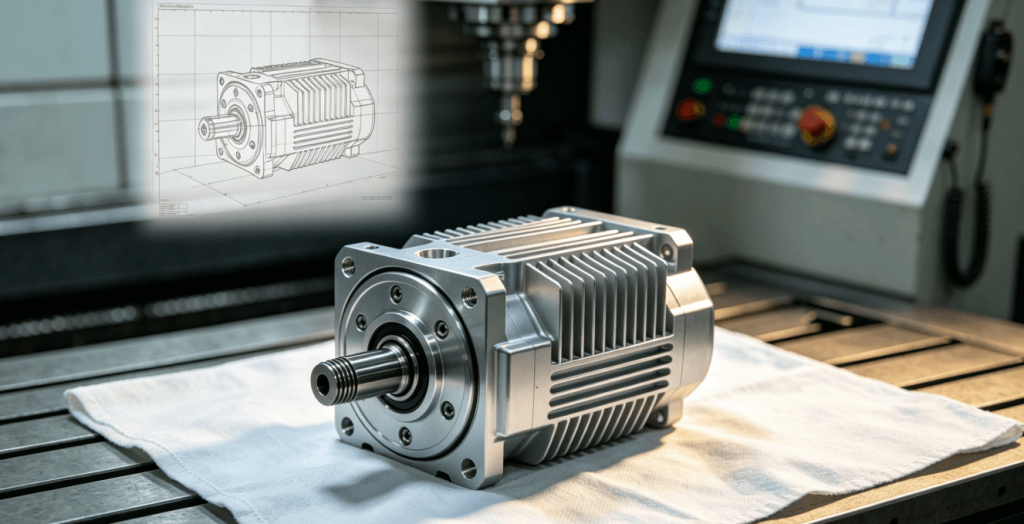
CNC machining aluminum is the preferred material for many different kinds of automobile CNC machining parts, thanks mainly to the constant drive within the industry to lighten up products. But it is important to be aware of their characteristics and weaknesses when selecting a material.
The aluminum alloys, especially the 6061-T6 grade, have great qualities. The fact that it is lightweight – about one-third lighter than steel – allows for better efficiency and performance of the vehicle. In terms of manufacturing, aluminum is ideal for high spindle speeds and feed rates, resulting in lower cost production and greater tool life than steel.
Nevertheless, aluminum does have some disadvantages. Aluminum is softer than steel and can easily scratch when it comes into contact with hard substances. It is also weaker and less resistant to heat than steel. Thus, aluminum should not be used for parts that are under constant stress and exposed to extremely high temperatures.
How to Build a Resilient, Cost-Effective, and Fast Global Manufacturing Support Network?
A modern optimal supply chain is not unique but rather consists of a combination of geographically located networks that benefit from the advantages provided by each one of them.
The strategic positioning of such a network consists of two centers: a “Cost Center” and a “Response Center.” In our case, the “Cost Center” for the manufacture of CNC automotive parts in high volumes is located in China because of its advantageous cost factors. The “Response Center” should be close to the market for producing CNC parts on demand or assembling the final product there.
The main factor in connecting all of these centers is powerful Digital Growth Tools. Cloud project management tools help with the synchronization of versions of the files that are uploaded into the cloud in real time. Production dashboards help to track the progress of orders from receipt of raw materials to dispatch. Professional multilingual project teams allow for efficient Global Client Support regardless of geographic distances.
Conclusion
In the current manufacturing environment around the world, being successful requires making informed decisions which are not based on any sort of geographical preference. By forming close ties with overseas partners with high-quality CNC machining certification, strong skills in working collaboratively to engineer products, and clear systems of Global Client Support, automobile manufacturers will be able to reap great rewards in cost savings and logistics while improving their quality.
If you are considering overseas suppliers for automotive CNC machining, and are looking for a cost/feasibility analysis of your parts, then contact JS Precision now for free consultation and Design For Manufacturing (DFM) reports.
Author Bio
This article is contributed by a precision manufacturing expert with over 15 years of experience, specializing in global supply chain optimization and the application of advanced manufacturing technologies.
FAQs
Q: Are lead times from Chinese CNC machining suppliers long, and do they impact project schedules?
A: In the case of standard components, the actual production time in China is relatively short (usually 5 to 15 days), to which the international shipping time needs to be added (air freight takes about 5 to 10 days). With proper scheduling and coordination between production and international logistics, the overall delivery time becomes quite competitive. Expedited shipments could further reduce this time frame.
Q: What should I do to guarantee that the manufactured parts will be a perfect match to the drawings?
A: It all depends on whether your supplier offers you the complete documentation for quality control, like FAIR, materials’ certification and 3D inspections reports. In distance collaboration, it is vital to employ Digital Growth Tools.
Q: Is it a good idea to work with a Chinese CNC machining supplier during the prototype phase?
A: Yes, it is a great idea. The major suppliers in China can provide you with quick prototyping that is completed within a few days. So it is an excellent option for validating your design and testing the Prototype to Scale workflow.
Q: Should I use aluminum or steel for my automotive structure component?
A: Again, it all depends on your specific needs regarding strength, weight, price, and machinability. If we speak about aluminum, then CNC machining of aluminum will be advantageous. At the same time, steel is stronger than aluminum. You should perform an analysis.
Q: Does communication create difficulties when cooperating with an overseas CNC machining supplier?
A: No, it does not create any barriers at all if you choose a reliable CNC supplier whose project managers are multilingual. This is what Global Client Support implies.
